CLASH OF CLANS: CAPITAL Vs LABOUR

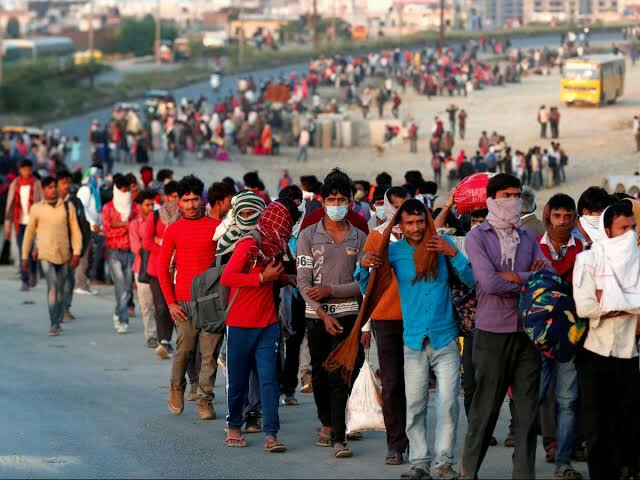
It is always said that every action has its own consequences. I guess we are encountering it from last few months. The worldwide pandemic has consequently led to a lockdown in most of the countries of the world. The most anticipated consequence of which was an economic slowdown. It is a never-ending chain of actions and consequences. Some consequences don’t even wait until the action is completed. The hasty decision of lockdown gave no time to migrant workers to board a vehicle which will take them to their homes. All the companies, industries, malls, cinema halls were closed and employers forced to suspend business operations, leaving them without the cash flow to pay their employees. The migrants are still walking 100 km (rather more) to reach their homes with just Rs. 100 /200
in their pockets not even sufficient for their 1-time meal.
          After looking at the hardship of migrant workers some orders, advisories followed which are the real topic of discussion.
          The Union Labour Ministry issued two advisories on March 20 about Covid-19 payments to workers:-
• asking public and private establishments to extend their coordination by not terminating their employees, particularly casual or contractual workers from  job or reduce their wages.
• If any place of employment is to be made none operational due to COVID-19, the employees of such unit will be deemed to be on duty.
•The second made the same appeal directly to public and private employers. 
              Then, the Union Home Ministry went a step further March 29 and issued an order directing state and union territories:-
– to ensure that all employers be it in industry or shop and commercial establishments, pay wages to their workers without any deductions for the period their establishments are under closure during the lockdown.
– the order also prohibited landlords from demanding rent from migrant workers living in rental premises.
           On March 31 the Maharashtra chief secretary in his capacity as chairman of the state’s disaster management authority under NDMA (National Disaster Management Act) issued a notification ordering that all employees, regardless of class, remuneration and designation, be paid full compensation during the lockdown.
Similar orders were passed by the state of Gujarat, Karnataka, Rajasthan.
     
The matter goes in the apex court:-
              Immediately, Nagreeka Exports Ltd appealed the constitutional validity of this notification and the NDMA Labour Notification in the Supreme Court. The Ficus Pax Pvt. Ltd. a Karnataka based company and a Ludhiana based association of MSMEs and many other companies have petitioned in the apex court seeking quashing of centre’s order. The order is challenged on the ground that it
arbitrary, illegal, irrational, unreasonable and contrary to the provisions of the constitution including Article 14 (equality of law and equal protection of the law), Article 19(1)(g) (right to conduct business)
               On April 27, the Supreme Court granted the government two weeks’ time to put its policy on record regarding these notifications.
             In two matters viz Hand Tool Manufacturers Association vs. Union of India  2020) and Indian Jute Mills Association & Anr. vs. Union of India the bench issued an interim order restraining coercive action against the employer for a period of one week for non-payment of wages as per MHA direction, while in other matter it only issued notices.


Two sides of the same coin:

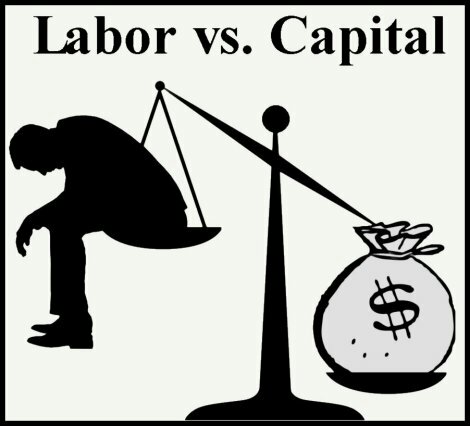
              These orders went through praises as well as criticism. Because this order started the game of clash of clans between two groups of the same family viz capital and labour.

The criticism part:

         The Nagreeka petition highlights expecting businesses to pay their employees is inequitable when Government is deferring payment of entire salaries during the lockdown.
         It is also questioned whether it is a statutory obligation or a corporate social responsibility (moral obligation) as called by the Ministry of Corporate Affairs on 10th April 2020. 
        Then Maharashtra Government order was criticized saying States’ powers NDMA Act are limited to assisting and protecting the community affected by disaster or providing relief to such community or preventing or combating disruption.
          It is also said that asking to pay full wages without giving financial support to the employers is pushing them to bankruptcy.
              In regard to the NDMA Act which overrides other statutes, it is argued that its intent and purpose are management of the disaster and its ambit cannot be expanded to seize other legislative fields, such as labour issues in respect of workers not infected by Covid-19. If that’s permitted, what prevents executive orders from suspending the basic structure of the Constitution?
              The said orders violate sec 25C and 25M of Industrial Dispute Act, 1947 which explicitly recognize the right of the employer to lay-off an employee and reduce wages to 50% up to a period of 45 days in certain eventualities including natural calamity and if after 45 days if the layoff continues, no wages are payable.
         The order nowhere defines which workers are included and which are to be excluded.

The praises part:
          All India Central Council of Trade Unions (AICCTU) has moved the Supreme Court seeking intervention as a Respondent in a plea against Government order on payment of full wages to employees during the lockdown period.
       

           First of all, it is said that whoever it may be either employers or government, but putting money in the pockets of workers is the need of an hour.
          The popular misconception is that the orders passed by the government are merely advisory but as being said these are the statutory orders so, violation of these statutory orders is not a moral wrong, but an offence inviting penalty and punishment both under the NDMA and the Indian Penal Code, 1860.
             While speaking of the lay-offs (termination of employment) COVID-19 has been notified to be a disaster under the NDMA. A disaster has to be distinguished from a natural calamity. The Industrial Disputes Act provides for layoffs specifically in case of natural calamities and not man-made disasters.
           If employees are terminated or wages are reduced, it would further deepen the crisis and weaken the financial condition of the employee.
           In one of the plea, it is argued that the employers are mostly profit-driven and most of them have been showing significant profits made by them in the preceding period and will be able to recover their losses.
          Merely because the employers are unable to provide work they cannot terminate/ deduct wages of their employees.
           The right to wages is a pre-existing right which is protected by a contract of employment as well as a broader constitutional and statutory scheme such as Articles 14 and 21 of the Constitution and The Payment of Wages Act, 1936 and The Labour Laws.
        Employers should follow the motto that, “Morality forbids what the law doesn’t” and at least on that principle alone pay their workers.
         But at this juncture, the latest guidelines issued by the Ministry of Home Affairs on May 17 for the fourth phase of lockdown from May 18 to May 31 has in effect nullified the order issued by the MHA on March 29 for full payment of wages to workers amid the lockdown.
              Though it has relaxed the burden from the shoulders of employers the problems of workers are still unsolved.
               Recently the Union finance minister Nirmala Sitharaman announced economic stimulus package for benefiting migrant workers, farmers, street vendors and the urban poor.
The package includes free food for migrant workers, cheap rental housing for migrant workers, an extension of credit facilities, For returning migrants who have no means of livelihood back in their home villages, State governments had been directed to enrol them under the Mahatma Gandhi National Rural Employment Guarantee Act.
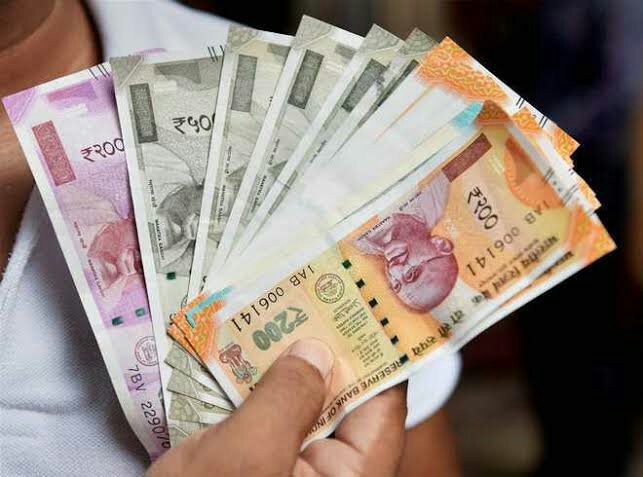
           But the economic package is a long term package and the migrant workers who have lost their livelihood need immediate cash in hand. The package announced last week did not include cash transfers to migrant workers because of the lack of a database with details of bank accounts and Aadhaar numbers of these workers.
Way Forward:
             Our lawmakers should have come up with a solution and enacted legislation to enforce it as there is no provision to deal with this unprecedented situation.
We must look at the steps taken by various countries like Australia, Canada, Ireland and the United States. Each of these countries has generated a wage subsidy or wage stimulus package which puts money directly in the pockets of concerned employees. We can’t let the backbone of our economy to go into a paralyzed state.

Sources :
1) https://www.mondaq.com/india/employment-and-workforce-wellbeing/929816/payment-of-wages-during-period-of-lockdown-implemented-to-contain-covid-19
2) https://www.barandbench.com/amp/story/columns%2Fpayment-of-wages-during-covid-19-lockdown-to-pay-or-notto-pay
3) https://m.economictimes.com/news/politics-and-nation/supreme-court-seeks-centres-reply-on-pleas-against-order-asking-employers-to-pay-wages-during-corona-lockdown/amp_articleshow/75427207.cms
4) https://www.telegraphindia.com/amp/opinion/coronavirus-legislation-a-must-to-ensure-workers-arent-denied-salaries-during-covid-19-pandemic/cid/1770613
5) https://theprint.in/opinion/modi-govt-telling-businesses-to-pay-staff-but-cutting-its-own-employees-salary-is-untenable/410873/?amp
6) https://www.thehindu.com/news/national/industries-cannot-be-forced-to-pay-wages-during-lockdown-panel/article31416299.ece
“Shadow Pandemic” – lockdown & domestic violence.

On 24 March, the Government of India under Prime Minister Narendra Modi ordered a nationwide lockdown for 21 days, which has frozen the movement of the entire 1.3 billion population of India. It was done as a preventative measure against COVID-19. Today we are in the second phase of the extended lockdown (until 3rd May). We have been asked to remain inside our houses to remain safe during this pandemic. But what if a house is not a safe place for somebody??
              I am referring to the most vulnerable class of our society; women & children.  According to the studies, there is an increase in domestic violence cases globally since the COVID-19 outbreak began and the lockdown was declared. There is also an increase in cases of child abuse. They are staying with their abusers for 24/7 which is horrifying.
Do you think this was something unexpected?? Not at all!
WHO Director-General Dr Tedros Adhanom Ghebreyesus warned that “stay-at-home orders and quarantine measures which are taken to try to reduce the spread of the coronavirus pandemic will likely lead to an increase in domestic violence”. He also added that ” We call on countries to include services to end violence as an ‘essential service’ that must continue during the response”.
            The increased abuse is a pattern repeated in many emergencies, economic crisis and disease spread.
This ” Shadow Pandemic” as a UN women term it has pierced in Australia, France, UK, Spain, Bangladesh and India too.

1) In Hubie province, the heart of the initial COVID-19 outbreak domestic violence reports to the police more than tripled in one country alone during the lockdown in February.
2) In Brazil, a state-run-drop in the centre has already seen a surge in cases it attributes to coronavirus isolation.
3) In Italy, activists said calls to the helpline had dropped sharply, but instead they are receiving text messages and emails.

These alarming figures log the only cases where women are able to seek help; many of them can’t make calls because they fear being overheard by abusive partners or are stopped from leaving home.

What is the situation in India??
     The National Commission for Women which receives complaints of domestic violence from across the country has recorded more than twofold rise in gender-based violence in lockdown period. The cases are high in Uttar Pradesh, Bihar, Haryana & Punjab.
              We can’t find solutions unless we are well aware of the root cause of any problem. There are many causes for the drastic peak in the graph of domestic violence cases:
1) Men are at home and taking out frustration on women and they refuse to participate in domestic work.
2) There is a fear of losing jobs & uncertain future while salary cuts are already there.
3) Global slowdown, massive economic, dislocation, closed businesses, the threat of hunger and poverty.
4) Psychologist says that the men’s ego is getting brushed as men are unable to stand being told to help. Stereotypical ideologies exist. It’s a woman’s job to do chores and its man’s job to earn.
We have to see what is the International approach to tackle the “intimate terrorism” practised by the abusers.

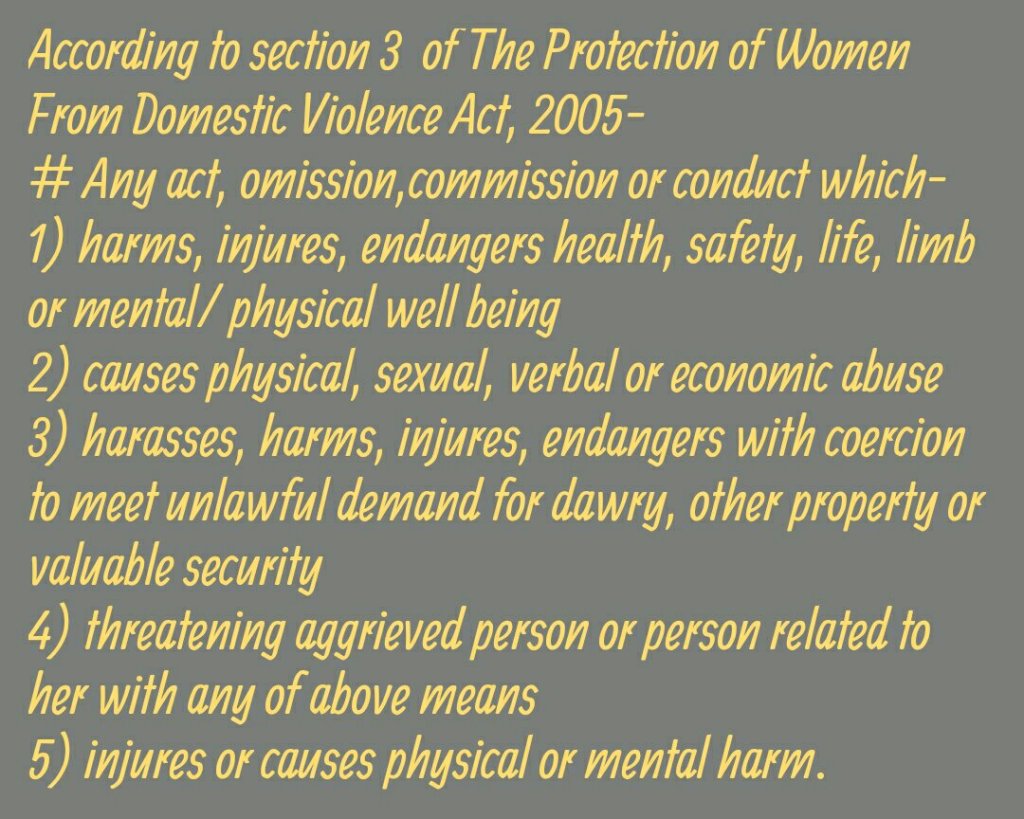
Definition of domestic violence

The strategy followed globally:-

1) In France, the government has announced that it will be paid to victims to stay in hotels. Notably, “popup counselling centres” will be installed in shops in the hope that women out buying groceries will be able to access them easily.
2) In the UK, the police are encouraging victims to use what they are calling a silent calling the emergency No. 999 and then dial 55. The police say that they will recognise the call as “a cause of concern”.
3) In Australia, the government has given a $142 million boost in funding to tackle domestic violence.
4) In Spain & France, women can go to the pharmacy and request a “MASK 19” a code word that will alert the pharmacies to contact authorities.
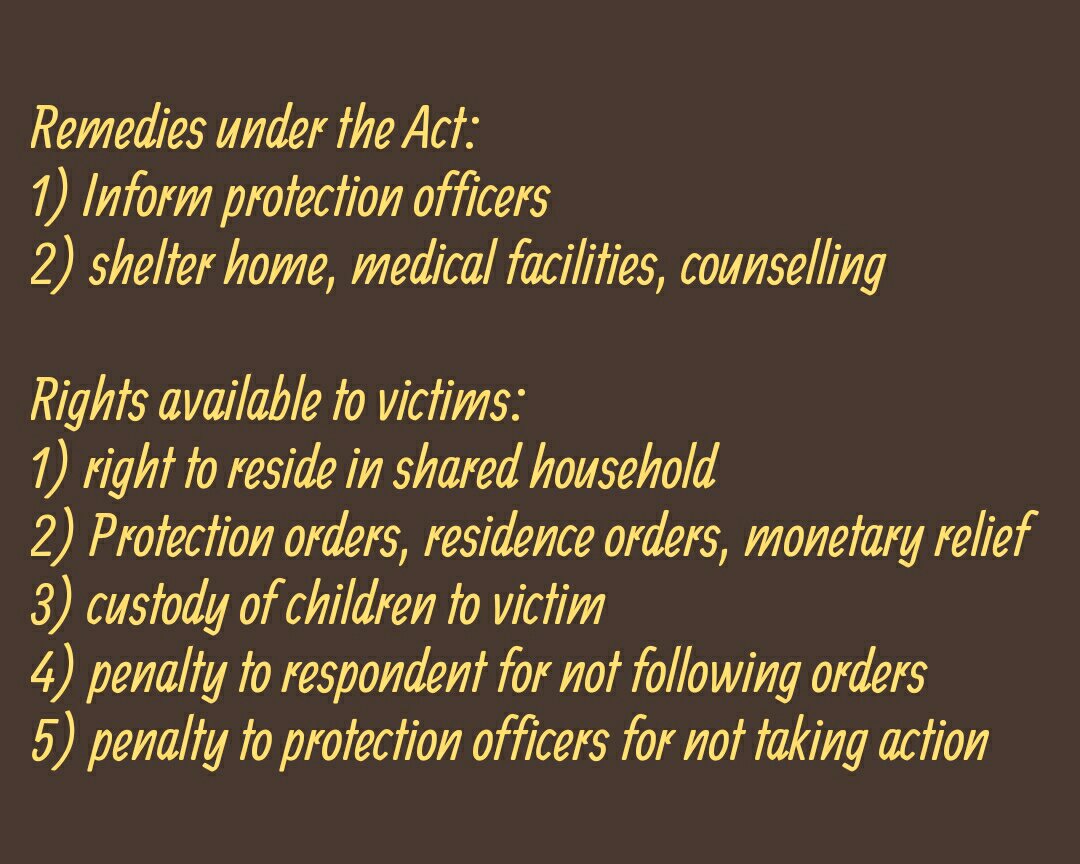
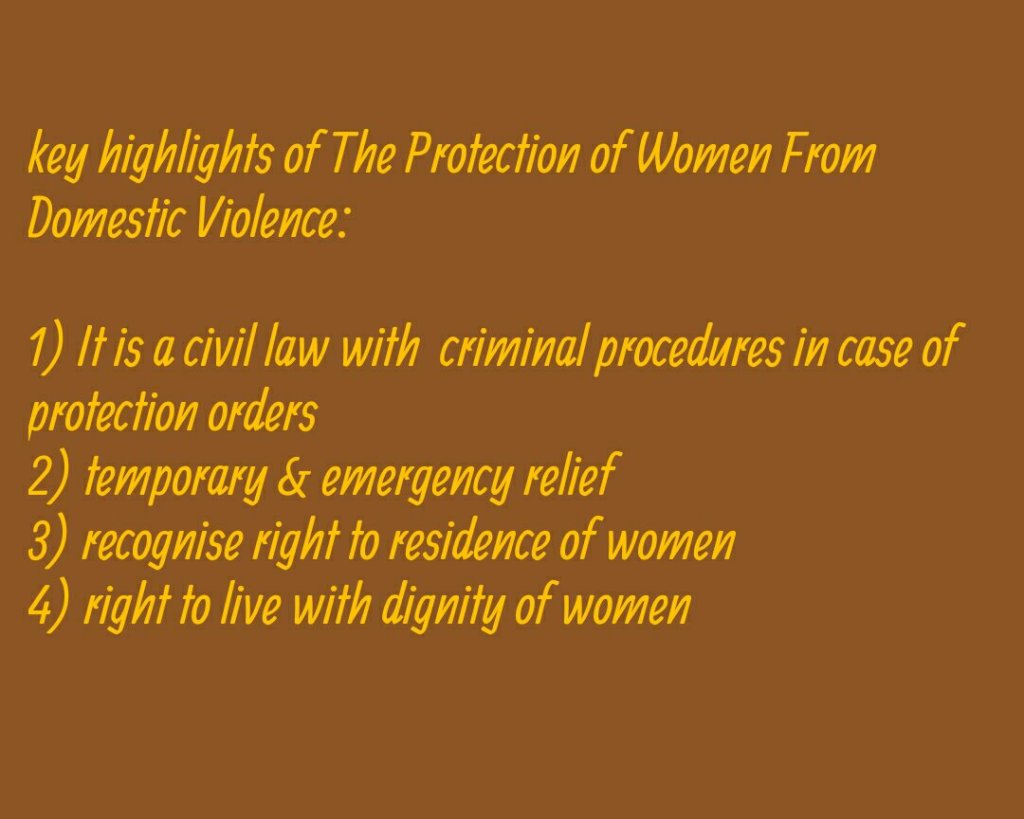
In India, we have The Protection of Women from Domestic Violence Act, 2005. But the current situation is exceptionally worse and it requires a new strategy to tackle.
But some of the traditional forms of support are now unavailable to domestic violence victims due to the lockdown.
For example:-
1) They don’t go to their parental homes for fear of infecting elderly parents.
2) Shelter homes are crowded.
3) The police force is already overburdened
4) Hospitals are busy doing their duties to handle COVID-19 cases.
        

What is India’s strategy to handle the increased complaints of domestic violence?

Currently, there is no systematic approach to tackle the issue in hand. Some NGOs have come forward made helpline numbers and email IDs but no firm policies have yet been formulated in this regard.
The Union Women and Child Development Minister Smriti Irani conducted a video conference on 8th April with institutes associates with her ministry. This was to discuss that Government and its machinery are working for women who seek protection. She gave a few instructions to the officials-
1) to ensure that One-stop centres which provide legal & psychological help to survivors of gender-based violence are linked with local medical teams, police and National Legal Service Authority.
2) One-stop centre teams must be linked with NIMHANS to equip counsellors across the country to deal with problems faced by women.
3) to opt for digital governance
4) NGO to try to ensure that every individual call at least 10 women every day to let them know that they are not alone.
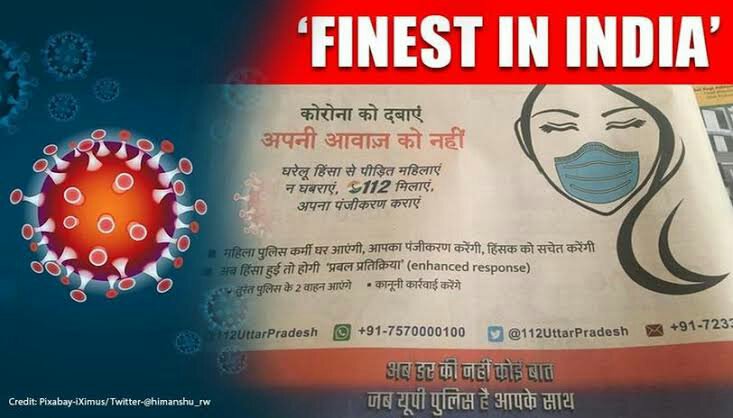
           The Police in Uttar Pradesh (having the worst track records of violence against women) have launched a new domestic violence helpline as the domestic violence cases are flooding. “Suppress corona, not your voice” was the advertisement on one of the newspaper. The UP police ensured that these cases will be handled by the women police staff.
       Until Government comes up with a strong head to beat these issues some of the experts, lawyers, psychologist have come up with various suggestions like-
1) Administration and law enforcement agencies to recognize the gravity of the problem and to believe the women.
2) reaching women in distress need to classified as an essential service
3) safe places where the victim can be shifted.
4) In rural areas, frontline health workers need to be the first point of contact for abused women with the panchayats and women’s self-help groups working jointly to provide safety and security to women.
5) To increase the number of shelter homes.
6) Regular checkup in slum areas.
7) Launch a mobile application, streamlining the form filing, in regard to alleged domestic violence act and accessibility to nearby protection officer. 
8) circulating the numbers of Protection Officers, as per their area of jurisdiction, through social media, Television broadcast, News Paper, etc.

What is happening on the judicial front:-

1) An NGO called All India Council of Human Rights, Liberties and Social Justice (AICHLS) has filed a Public Interest Litigation (PIL) in Delhi High Court.
2) The Jammu and Kashmir High Court has taken suo moto cognizance.
3) The Karnataka High Court has asked the state government about the action it is taking due to an alleged spike in cases of domestic violence, during the lockdown.
4) A letter has been addressed to Union Minister of Women & Child Development and National Commission for Women by Supreme Court Lawyers.

few common suggestions and guidelines-
• Appointment of Nodal Officers to attend distress calls by victims,
• Setting up area-wise hotline numbers, to be made functional 24/7,
• Wide publicity of all helpline numbers through TV ads, social media, newspapers, on news channels, the radio, SMSs, Tele-Calls, etc.
• free online or tele-counselling facilities, etc.
• funding, increase in the availability of call-in service
• to treat domestic violence cases as ‘urgent cases’.
        but even after giving the resources to the victims to approach the concerned authority, the question remains about how to deal with the abusers. Can we adopt penal sanctions on perpetrators during the lockdown period?
      A detailed study by Ms Radha Iyengar at Harvard University revealed that police action in case of domestic violence actually increased intimate partner homicides.

Steps already taken by central Government:-

1) Advisory issued to concerned authorities to remain operational during lock down
2) Emergency Response Support System over the short code 112. 3) Ministry of Health and Family Welfare in collaboration with “NIMHANS” has started a helpline 080 – 46110007 to provide psychological support to victims of domestic violence. 4) launched special whatsapp number 7217735372 5) advisory to TV channels, FM radio to give adequate publicity on women safety and person in distress

Opinion:
The situation seems complex and critical. As the police personnel are busy in lockdown duty the Government can appoint temporary staff or take help of NGOs, lawyers, psychologists, counsellors to deal with the situation. If the victims to be allowed to move to another place like their parents home. Along with domestic violence cases attention to be given to the rising child abuse cases.

Sources : 1) https://www.thehindu.com/news/national/centre-rolls-out-steps-for-womens-safety/article31292540.ece
2) https://qz.com/india/1838351/indias-coronavirus-lockdown-leads-to-more-violence-against-women/amp/
3) https://www.outlookindia.com/blog/story/india-news-domestic-violence-can-be-isolated-repetitive-or-even-span-generations/4138
4) https://www.nber.org/papers/w13186
5) https://www.google.com/amp/s/amp.theguardian.com/society/2020/mar/28/lockdowns-world-rise-domestic-violence
6) https://www.livelaw.in/news-updates/delhi-hc-asks-govt-women-from-domestic-violence-155812
7) https://www.livelaw.in/news-updates/hc-asks-state-about-action-taken-on-increasing-complaints-of-dv-during-lockdown-155639
8) https://www.livelaw.in/columns/domestic-abuse-the-unseen-crisis-of-the-covid-pandemic-155544
9) https://www.livelaw.in/news-updates/protection-of-women-from-domestic-violence-during-lockdown-delhi-hc-directs-centre-delhi-govt-to-convene-high-level-meeting-155513
10) https://www.livelaw.in/news-updates/stop-intimate-terrorism-plea-in-delhi-hc-against-increase-in-domestic-violence-and-child-abuse-cases-during-lockdown-155351

What is an Epidemic Disease Act, 1897? Why do we need to know about it at this juncture(pandemic of COVID-19)? What is the Disaster Management Act, 2005? And more to discuss…Here are the detailed answers of all the questions not only a legal professional but also a layman need to know about!!

      So, before we start let me give you a broad structure of what I will be focusing on:-
0) The Pandemic of COVID-19.
1) the historical development of The Epidemic Diseases Act, 1897.
2) what are the bare provisions of the Epidemic Diseases Act, 1897?
3) Other legislation relating to public health and epidemics.
4) what is the constitutional stand on this Act.
5) What are the lacunae’s of The 123-year-old Act?
6)What is the international scenario?
7) What is the way out of this?
8) Socio-political impact
9) Impact on the economy
10) conclusion

0) The Pandemic of COVID-19 :
           When we talk about LIFE, there are two absolute truths. The one is the birth and another is the death. Throughout the course of history, humans have faced a number of disease outbreaks which has devastated humanity. Epidemics & pandemics are not new to human beings. There was Plague, Polio, H1NI flu, ebola virus epidemic are few of them to be named.
          I would like to specifically mention that the words epidemic and pandemic though used interchangeably are not one and the same. The word ‘EPIDEMIC’ means ‘one affecting many persons at the same time and spreading from person to person in a locality where the disease is not permanently prevalent’. According to WHO epidemic is at the level of a region or community. While the word ‘PANDEMIC’ is defined by WHO as, ‘ worldwide spread of a new disease’.
         It was the 11th March when WHO officially declared the COVID-19 outbreak a pandemic due to its global spread and severity.
          When the whole nation comes across such kind of pandemics or epidemics, the respective Governments are overburdened with the task of saving the lives of their people. Such situations can only be tackled with the help of organised machinery and rules & regulations. Hence, to suffice the purpose we need Laws to be framed.

1) Historical Development Of The Epidemic Disease Act, 1897:-
       It was the year of October 1897 when  Bombay (Mumbai) suffered through a terrible outbreak of plague resulting in mass deaths. It is called the bubonic plague ( so-called because of swelling called buboes that erupted on bodies of infected). Almost 52 countries got affected by the said pandemic.
         In January 1897 Sir John Woodburn, member of Viceroy’s legislative council moved a bill to help Government in India to battle with the plague. This Act is called as Epidemic Disease Act, 1897. It gave wide powers to viceroy’s council which lead to:
1) demolition of the unsanitary buildings
2) inspection of people by a medical officer
3) detention of suspected people
4) disinfection and closing of ports

2) The bare provisions of The Epidemic Diseases Act, 1897:-
The Act consists of a total of 5 sections. The Act was amended in 1937 where wide powers were given to the state Government. After almost 123 years our government have invoked the same Act to tackle the pandemic of COVID-19.
In the Epidemic Diseases Act, 1897, section 2 empowers the State Government to prescribe temporary regulations to be observed by the public or the class of people to prevent the outbreak of the dangerous epidemic disease. The State Government may take measures and prescribe regulations for –
Inspection of the person travelling by railway, segregation in hospital, temporary accommodation of a person suspected of being infected by the disease. Section 2A empowers Central Government to take measures and prescribe regulations for the inspection of the ship or the vessel leaving or coming at any port and detention of a person intending to sail therein or arriving thereby. This shows that wide powers were given to the State Government and very limited powers to the Central Government. Section 3 is pari passu (i.e. on equal footing) with section 188 of The Indian Penal Code, 1860. This section states that: Disobedience to order duly promulgated by the public servant. The punishment under this section is simple imprisonment of one month or a fine of Rs. 200 or both. If such disobedience causes danger to human life, health, safety, etc the punishment is for 6 months or with a fine of Rs 1000 or both.

3) Other legislation relating to public health and epidemics:-
           
There are some states in India who have enacted their own health-related laws. For example, Madya Pradesh Public Health Act, 1949, Tamil Nadu Public Health Act, 1939, Goa, Daman and Diu Public Health Act, 1985. These Acts have provisions regarding sanitation, water, drainage, and at the same time deals with infectious diseases as well.
For example, the Madhya Pradesh Public Health Act, 1949 has provisions regarding:
1) Notification of infectious diseases
2) isolation of affected persons
3) temporary occupation of premises
4) disposal of bodies of persons dying due to such disease
But the point of concern is that all state don’t have their own laws and hence the Ministry of health and family welfare of India advised the states to invoke the Epidemic Disease Act, 1897. Under this act states like Karnataka, Maharashtra, Haryana, Delhi, Madhya Pradesh issued Epidemic Regulation Disease COVID-19 2020 (Some of them to be named).
As far as the central government is concerned there is no law specifically dealing with the outbreak of infectious diseases has been enacted. So, the central government invoked a Disaster Management Act, 2005 to issue advisories and directives including 21 days lockdown issued on 24th March 2020. The thing is that the words epidemic and infectious diseases do not fall expressly under the definition of the word ‘disaster’. But this act allowed the government to use disaster management fund to tackle the problem and also some other powers to deal with pre and post-disaster situations. Another central legislation is The Indian Penal Code, 1860 in which provisions like section 188 and section 269-270 provide for the punishment in case of violation of any executive orders and for acts likely to spread infection of dangerous diseases respectively. Some other laws having provisions regarding epidemics are the Livestock Importation Act, 1898, Indian Ports Act of 1908, Drugs and Cosmetics Act of 1940, and Aircraft Rules of 1954.

4) what is the constitutional stand on this Act:-
While checking the Constitutional validity of the various actions taken by the Government, many have questioned that-
1) What is the constitutional backbone to the lockdown?
2) Public health is a state subject how can the central government order lockdown?

To answer the 1st question I would like to site a few Judgements of The Hon’ble Supreme Court on the same issues arrived before it-

1) State of Punjab V M.S.Chawla, 2013:-
Herein, the supreme court stated that the right to health is an integral part of the right to life and hence the state has a positive obligation under Article 21 of The Constitution of India to swing into action in the face of a public health emergency such as present pandemic to protect lives of its people.
2) Narendra Kumar V UOI, 1960:-
Though lockdown affects the right to move freely in the territory of India and right to practice any profession or carry occupation, trade or business, it is still subject to the reasonable restrictions under Article 19(5) and 19(6) and such reasonable restrictions can be imposed on these rights in the interest of the general public.
3) Bannari Amman Sugars Ltd V CTO, 2005:-
The Hon’ble Supreme court observed that a restriction does not become unreasonable merely because it operates in a harsh manner. The Supreme court also stated that guidelines issued under the Disaster Management Act, 2005 are reasonable restrictions.
        So, to conclude the lockdown is totally Constitutional.

           In the parlance of the second question, there are basically 3 lists under the 7th schedule of The constitution of India namely Union List, State List and Concurrent List. This is for the division of power between the centre and the state.
             The provisions to tackle the current situation are-
Entry 6 of the state list which deals with public health
Entry 81 of the union list empowers centre to make laws on interstate quarantine and quarantine of ports and ships.
We have already discussed section 2 and 2A of The Epidemic Disaster Act,1897 empowering state and centre respectively in the concerned matters.
          But instead of going through any of these ways, the centre rather took the route to impose a lockdown which is the Disaster Management Act,  2005 which comes under the head of social security (entry 23 of the concurrent list). Though the definition of disaster does not expressly talk about such epidemic the Government has termed COVID-19 as a disaster while looking at the magnitude of the problem. The PM is the ex-officio chairperson of the National Disaster Management Act, 2005 under section 3(2)(a) and has the power to take measures for the prevention and mitigation of the disaster.
          So, basically, all the decision was taken by the central and state government are the outcome of
1) The national disaster management act, 2005
2) Epidemic disease Act, 1897
3) MHA Guidelines ( as Disaster Management Divison comes under the aegis of the MHA)
            According to some constitution experts, there are many colonial-era laws continue to exist in the statute as the government over years have thought they are good enough. While some have stated that there are various lacunae’s in the Act of 1897:-
Here are few to be listed-

5) Identifying the lacunae’s:-

1) lack of essence of collaborative federalism- The Constitution idealises both the centre and the state as harmonious coexistence and interdependence. But in the current situation, there seems an overlap of authorities and clarity of command and coordination between centre and state.

2) Limitation of epidemic disease act, 1897-
    I) it is almost 123 years old and thus has a major limitation in the era of changing priorities in the public health emergency management.
     II) The act needs modifications in changing scenario like the Act is too oriented towards travel by ship and silent on ‘air travel’ which was uncommon at that time.
     III) the act does not define ‘dangerous epidemic disease’ anywhere
     IV) the act is not in line with the contemporary scientific understanding of the outbreak prevention and response.
       V) The Epidemic Diseases Act is purely regulatory in nature and lacks a specific public health focus. The Act emphasises the power of the government but is silent on the rights of citizens.

6) What is the international scenario:-

1) Canada has the emergency act, 1988 and the emergency management act, 2007 to handle the situation of such pandemics and to take the measures accordingly. Most of the provinces also have their own health acts but in most of the matters, the federal government takes the lead to deal in a health emergency. So, both central and state government work in coordination with each other.
2) In Australia, there is the National Health Security Act, 2007 which is made to deal with national health emergencies with designated entities. Provinces also have their own laws.
3) In England, there is public health control of diseases Act, 1984 to deal with a national health emergency. In this Act, the responsibilities are clearly divided by a hierarchical chain at the primary, secondary and tertiary responders.
4) In the US, there is a Public health service Act, 1944. It has a strong administrative framework. The act was lastly amended in Dec 2019. President Donald Trump has now invoked the Defense Production Act, 1950 to battle the pandemic.

7) What is the way forward:-
             We require a strong legal framework relevant to the current context. The draft National Health Bill 2009 seems to be a helping hand. It has provisions like-
1)  It upholds the right to treatment and care
2) it gives public health obligations of Government
3) formation of public health boards at national and state levels
4) grievance redressal mechanism
      But the bill lacks the reference of ethical frameworks or protection of human rights.
In this context, we can set up a public health regulatory authorities e.g. food & safety standard authority of India. A public health regulatory authority can propose, review and revise public health legislations on a periodic basis, recommend and lay down public health priorities, collaborate with health systems for strategic planning, provide scientific advice and technical support for the framing of state rules, help to streamline the procedures, see to the uniform implementation of laws, and act as a coordinating body which bears the overall responsibility for the effective working of the regulatory system. (stated in Indian Journal Of Medical Ethics)

8) Socio-political impact:-
 
I) Health staff-

           The united nurses association moved to the Supreme Court for the formulation of National COVID-19 management protocol. They have listed a few issues faced by health workers in the petition like-
a)Non-availability of a sufficient number of COVID-19 testing kits
b)Sub-standard Personal Protection Equipment’s (PPE)
c)Lack of basic facilities in isolation wards d)Isolation precautions are not being followed by WHO norms
e)Hourly disinfection is not being done in the wards
f)Mental harassment in the nature of forced over-time followed by negligible transport facilities and deduction of salary on account of leaves
g)Health care workers who are pregnant, lactating or immune-compromised are being forced to work
h)The recent trend of eviction of health care workers from rented/leased property
Lack of accommodation, food, transportation etc.
i)Lack of free medical support for the health care workers and their families
j)Continuous breach of Government guidelines by private hospitals.
     They have asked for reliefs like:
a) accommodation in close proximity for health workers
b) adequate and prompt transport
c) proper screening of suspected patients &
ensure speedy testing of suspected cases.
d) Landlords / Owners throughout the country be prohibited from adhering to the recent trend of evicting the health workers.
e) proper training, etc

II) Migrant Workers:-
               The hasty decision of lockdown has made the life of daily workers worse than they have ever expected. They are on roads, no place to stay no food to eat. There are also cases of these workers being hit by vehicles when they were walking to their homes at night.
              The plea has been filed by Advocate Alakh Alok Srivastava in Supreme Court for rehabilitation measures for migrant workers after lockdown. This petition gives a few suggestions and prays the court to give direction to the government to provide-
a) Free transportation to their destination via special bus/train
b) Ex-Gratia one month minimum statutory wage
c) One month’s free ration without insisting on a ration card
d) composite plan for the rehabilitation of aggrieved workers, etc
    The detailed application is available on the website of live law.

III) communal atmosphere:-
         when united efforts are required to fight against COVID-19, some of us are spreading communal hatred. Jamiat ulama-i-hind, an organization of Islamic scholars, has moved the Supreme Court seeking strict action against the media for communalization of the Tablighi Jamaat meeting in Delhi’s Nizamuddin. The petition states that-
” The present petition is necessitated on account of the communal colour being given to the outbreak of the COVID-19 pandemic by certain sections of print, electronic and social media posing a threat to the life and liberty of Muslims infringing their fundamental rights under Article 21 of the Constitution. The demonization is also an infringement of the right to live with dignity which is also covered under Article 21 of the Constitution.”

IV) This lockdown has also affected badly to the transgender community

V) Farmers have turned to be in the most vulnerable situation. This time the reason is not the heavy rainfall or the drought but it’s the lockdown. They have their healthy crops in the farms but they don’t have markets to sell, no transportation to travel and many more hurdles to earn for their survival.
      These were the few groups of society I have highlighted. In the same way, this lockdown has affected every middle-class person, a person of below poverty level, roadside thela wala and the list is as huge as our population.

9) Impact on the economy:-
As all of us knows that our economy was already going through demand depression and unemployment. The lockdown has triggered the slowdown further and harmed the economic well-being of millions.
     
Conclusion:
There is a need to strengthen legal frameworks to prevent and control the entry, spread and existence of communicable diseases in India. There is a need for an integrated, comprehensive, actionable and relevant legal provision for the control of outbreaks in India.

Sources:
1) https://www.livelaw.in/columns/the-law-and-the-lockdown-154668

2) https://www.livelaw.in/know-the-law/epidemic-diseases-act-1897-the-123-year-old-law-invoked-to-combat-covid-19-explainer-154218

3) https://theprint.in/opinion/plague-1896-sedition-covid-19-mustnt-set-laws-outlive-crisis/386552/

4) https://www.livelaw.in/columns/law-in-the-time-of-corona-154718

5)  https://www.livelaw.in/top-stories/united-nurses-association-move-supreme-court-for-formulation-of-national-covid19-management-protocol-read-petition-154829

6) https://www.thehindu.com/news/cities/mumbai/covid-19-lockdown-transgender-community-pushed-further-to-the-margin/article31265535.ece

7) https://www.livelaw.in/top-stories/jamait-ulama-i-hind-moves-sc-seeking-action-against-media-for-communalizing-nizamuddin-markaz-issue-read-petition-154868

8) https://ijme.in/articles/the-epidemic-diseases-act-of-1897-public-health-relevance-in-the-current-scenario/?galley=html